
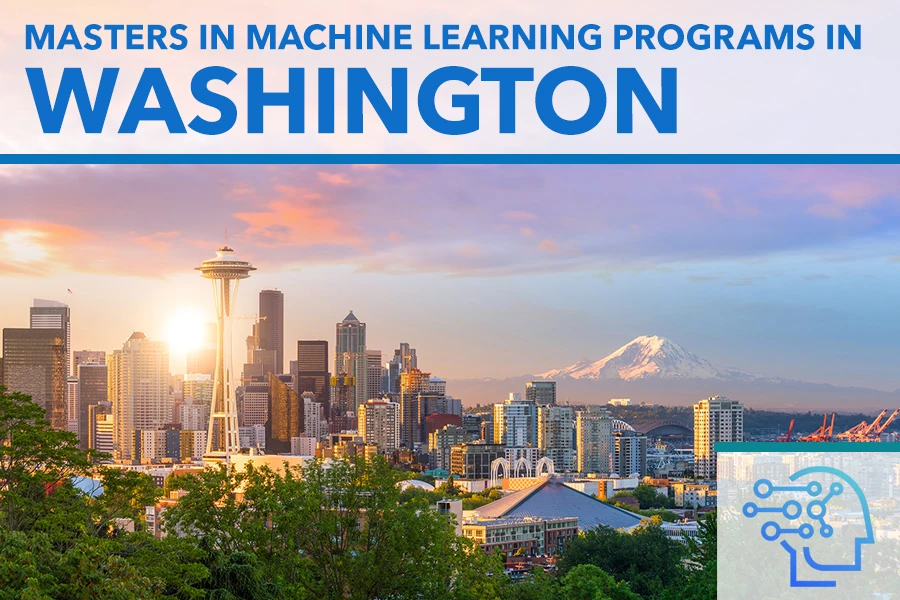
Washington State is a powerhouse for technology and innovation, making it an ideal environment for individuals with a Master’s degree in Machine Learning. The state’s robust AI ecosystem, particularly in the Seattle metropolitan area, offers unparalleled opportunities.
Here’s why Washington State is a prime destination for ML Master’s graduates:
High Demand and Lucrative Careers:
- Washington ranks among the top states for AI job activity, with Seattle being the second-largest AI job hub in the country.
- The demand for Machine Learning Engineers is consistently strong, with roles such as “Machine Learning Engineer” dominating job postings.
- The average annual salary for a Machine Learning Engineer in Washington is substantial, with Seattle offering an average of over $180,000.
- Companies are actively seeking mid-senior level professionals with 2-6 years of experience, indicating a need for graduates ready to contribute immediately.
Leading Industries and Companies:
Washington is home to tech giants like Microsoft, Amazon, Google, Apple, and Snap Inc.
Beyond major tech, the state’s diverse economy offers opportunities in various sectors, including:
- Cloud Computing: CoreWeave, AWS, Microsoft Azure.
- Robotics & Agriculture: Carbon Robotics (AI-powered LaserWeeder™).
- Natural Language Processing (NLP) & Generative AI: Grammarly, Qualtrics, and numerous roles involving LLMs.
- E-commerce and Retail: Amazon [3].
- Healthcare and Life Sciences: Opportunities for medical image analysis and patient risk scoring.
Many companies in Washington are developing custom AI models, predictive analytics, and MLOps solutions, creating diverse roles for ML specialists.
As you can see, students with a Master’s degree in Machine Learning in Washington State are well-positioned to find lucrative job opportunities for with competitive compensation.
2026 Best Schools for Masters in Machine Learning Degrees in Washington
University of Washington-Seattle Campus
Seattle, WA - Public 4-Year - washington.edu
Master's - Master of Science in Artificial Intelligence and Machine Learning for Engineering (Artificial Intelligence and Machine Learning for Engineering, Data Analytics for Systems Operations, AI/ML-Driven Molecular and Process Engineering)
Online & Campus Based - Visit Website
The University of Washington-Seattle Campus offers a Master of Science in Artificial Intelligence and Machine Learning for Engineering, a hybrid program blending online and part-time study. It specializes in the Artificial Intelligence and Machine Learning for Engineering concentration, focusing on applying AI and ML to solve engineering problems, with additional options in Data Analytics for Systems Operations and AI/ML-Driven Molecular and Process Engineering. Admission requires a 3.0 GPA and does not mandate an entrance exam. Emphasizing practical skills and ethical AI use, it prepares engineers for advancements in their careers.
- Hybrid program flexibility.
- Focus on AI and ML applications.
- No standardized test required.
- 3.0 GPA admission requirement.
- Part-time and online options.
- Concentration options available.
- Practical skills emphasis.
- Ethical AI use focus.
- Prepares for career advancements.
- Tailored learning paths.
Western Washington University
Bellingham, WA - Public 4-Year - wwu.edu

Master's - Master of Science in Computer Science (Machine Learning)
Campus Based - Visit Website
Western Washington University's Master of Science in Computer Science with a Machine Learning concentration equips students for advanced roles in tech or further academic pursuits. This on-campus program delves into AI and machine learning through hands-on research and real-world projects, supported by a diverse and active student body. Financial aid, including assistantships and scholarships, is accessible. Graduates often join leading companies such as Google and Microsoft. Admission occurs in Fall, Winter, and Spring quarters, with no entrance exam required as it is not mentioned in the provided data.
- Concentration in Machine Learning
- Campus-based program
- Financial aid available
- Diverse student community
- Strong alumni network
- Research opportunities
- Real-world project focus
- Admission in multiple quarters
- Prepares for PhD or industry
- Vibrant academic environment
2026 Lowest Cost Programs
| School Name | Highlights | Annual Estimated Tuition & Fees |
|---|---|---|
| Western Washington University |
| |
| University of Washington-Seattle Campus |
|
|
What School Should You Choose?
This analysis compares the University of Washington-Seattle and Western Washington University programs, examining their distinct approaches, costs, and career preparation strategies to help you select the optimal fit for your goals.
Program Overview & Philosophy
University of Washington-Seattle (Engineering Focus)
- Specialization: AI and ML applications specifically for engineering disciplines
- Format: Hybrid online and campus-based learning
- Target Audience: Working engineers seeking to integrate AI/ML into their current fields
- Unique Concentrations:
- Data Analytics for Systems Operations
- AI/ML-Driven Molecular and Process Engineering
- Artificial Intelligence and Machine Learning for Engineering
Western Washington University (Computer Science Foundation)
- Specialization: Traditional CS approach with ML concentration
- Format: Campus-based program with immersive learning experience
- Target Audience: Students seeking comprehensive CS education with ML specialization
- Focus: Theoretical foundations combined with practical research applications
Cost Analysis & Value Proposition
Western Washington University (Budget Leader)
- In-State: $10,800-$16,100 annually
- Out-of-State: $21,300-$31,900 annually
- Total Program Cost: Approximately $21,600-$32,200 (in-state)
University of Washington-Seattle (Premium Value)
- In-State: $14,900-$22,400 annually
- Out-of-State: $26,000-$39,000 annually
- Total Program Cost: Approximately $29,800-$44,800 (in-state)
Value Analysis
- WWU: Exceptional affordability with strong alumni placement at major tech companies
- UW-Seattle: Higher cost but specialized engineering focus and hybrid flexibility
- Both programs provide excellent ROI in Washington’s high-salary tech market
Program Structure & Requirements
University of Washington-Seattle
- Admission: 3.0 GPA minimum, no standardized tests required
- Flexibility: Part-time and online options available
- Timeline: Flexible completion based on chosen format
- Prerequisites: Engineering background preferred
- Focus: Practical skills with ethical AI emphasis
Western Washington University
- Admission: No entrance exam required, multiple application periods
- Format: Full-time campus-based program
- Timeline: Traditional academic calendar with Fall, Winter, Spring starts
- Support: Financial aid, assistantships, scholarships available
- Community: Diverse student body with strong research culture
Specialized Focus Areas
UW-Seattle: Engineering Applications
- Systems Operations: AI for industrial and infrastructure systems
- Molecular Engineering: AI applications in materials science and chemistry
- Process Engineering: Machine learning for manufacturing and production optimization
- Ethical AI: Responsible implementation in engineering contexts
- Hybrid Learning: Combines theoretical knowledge with practical engineering applications
WWU: Research & Industry Preparation
- Theoretical Foundations: Strong mathematical and algorithmic foundations
- Research Projects: Real-world problem solving with faculty mentorship
- Industry Connections: Alumni network at Google, Microsoft, and other tech leaders
- Academic Pathway: Preparation for both industry careers and PhD studies
- Campus Experience: Full immersion in academic research environment
Decision Framework
Choose University of Washington-Seattle if:
You’re a Working Engineer
- Currently employed in engineering fields seeking AI/ML integration
- Need flexible scheduling with hybrid online/campus options
- Want specialized focus on engineering applications rather than general CS
- Can invest in higher tuition for specialized, industry-relevant curriculum
You Want Industry-Specific Applications
- Interested in systems operations, molecular engineering, or process optimization
- Seeking practical skills directly applicable to current engineering role
- Value ethical AI training relevant to engineering responsibilities
- Prefer part-time study while maintaining full-time employment
Choose Western Washington University if:
You Want Traditional Academic Excellence
- Seeking comprehensive computer science foundation with ML specialization
- Prefer full-time campus-based learning with research opportunities
- Want access to diverse academic community and faculty mentorship
- Budget-conscious but don’t want to compromise on program quality
You’re Planning Academic or Research Career
- Interested in pursuing PhD studies after master’s completion
- Want strong theoretical foundations alongside practical applications
- Seeking research opportunities with published faculty
- Value alumni network connections at major tech companies
Career Outcomes & Industry Connections
University of Washington-Seattle Advantages
- Engineering Industry Focus: Direct pipeline to engineering firms adopting AI
- Seattle Tech Ecosystem: Prime location for major tech company recruiting
- Specialized Skills: Unique combination of engineering and AI expertise
- Flexibility: Part-time study allows career advancement without interruption
Western Washington University Advantages
- Proven Alumni Success: Graduates placed at Google, Microsoft, and other tech leaders
- Research Experience: Strong preparation for both industry and academic careers
- Cost Effectiveness: Lower total investment with comparable career outcomes
- Academic Support: Financial aid and assistantships reduce financial burden
Geographic & Lifestyle Considerations
Seattle Area (UW)
- Pros: Major tech hub, extensive networking opportunities, urban amenities
- Cons: Higher cost of living, traffic congestion, competitive job market
- Best For: Working professionals already established in Seattle area
Bellingham Area (WWU)
- Pros: Lower cost of living, beautiful location, smaller community feel
- Cons: Fewer immediate tech job opportunities, smaller networking base
- Best For: Students prioritizing academic experience and budget considerations
Technology Focus & Curriculum Depth
Engineering-Specific Applications (UW-Seattle)
- Industrial IoT and smart manufacturing systems
- Materials science and molecular modeling
- Process optimization and predictive maintenance
- Infrastructure monitoring and management
- Ethical considerations in engineering AI deployment
Broad CS Foundations (WWU)
- Algorithm design and computational theory
- Statistical learning and probabilistic methods
- Software engineering and system design
- Research methodology and experimental design
- Academic writing and presentation skills
Final Recommendation
For Working Engineers: University of Washington-Seattle provides specialized training directly applicable to engineering careers, with hybrid flexibility justifying the higher investment.
For Academic Excellence on Budget: Western Washington University delivers comprehensive education at exceptional value with proven industry placement.
For Career Changers: WWU offers more accessible entry into ML field with broader foundational training.
For Specialized Expertise: UW-Seattle’s engineering focus creates unique career opportunities in industrial AI applications.
Washington state’s machine learning programs leverage the Pacific Northwest’s exceptional tech ecosystem while serving different student populations. UW-Seattle specializes in engineering applications with professional flexibility, while WWU provides comprehensive academic training at outstanding value. Both programs offer strong pathways to successful ML careers in one of the nation’s most dynamic tech regions.
Local Job Market Analysis
Washington State’s thriving tech ecosystem offers exceptional opportunities for machine learning engineers, with companies ranging from established tech giants to innovative startups seeking top-tier ML talent. Here’s what leading employers are looking for and what they’re willing to pay for the right skills. (based on an analysis of current job openings from sites like Google Jobs and Ziprecruiter).
Core Programming and Technical Skills
Python Proficiency (Universal Requirement)
Every employer emphasizes Python as the foundational programming language. Qualtrics requires experience with Java, C#, or Python including object-oriented design, while TikTok demands solid coding skills alongside Python expertise. Expedia Group expects comfort programming in Python and experience across at least 3 languages. Snowflake specifically requires proficiency in Python and core ML frameworks including Pandas, NumPy, and Scikit-Learn.
Deep Learning Frameworks
Aquent (Redmond) requires 2+ years with TensorFlow specifically, while Apex Systems seeks experience with PyTorch, TensorFlow, or JAX. Chewy values experience with AWS ML services like SageMaker, and UnitedHealth Group demands proven skills in PyTorch or TensorFlow. Truveta emphasizes proficiency in PyTorch or TensorFlow for healthcare applications.
Cloud and Infrastructure Expertise
Cloud experience is critical across all major employers. Expedia Group requires AWS experience with workflow orchestration tools like Airflow. PEMCO specifically needs 3+ years with Azure and Databricks AI/ML services. Aquent seeks experience with AWS, Google Cloud, or Azure for cloud-based training environments.
Machine Learning Specializations
Large Language Models and Generative AI
The hottest area of demand comes from companies building next-generation AI products. Apple offers $296K annually for staff engineers to prototype and optimize GenAI models for scalable production. TikTok pays $137,750-$237,500 for search engineers working on multi-modal matching and NLP. Truveta offers $155,000-$175,000 for engineers specializing in LLMs and healthcare applications, requiring experience with supervised fine-tuning and reinforcement learning techniques like RLHF.
Robotics and Reinforcement Learning
Aquent and Apex Systems both offer $74-$82/hour for contract positions focusing on robotics applications. These roles specifically require 2+ years with ROS/ROS2 and emphasize candidates with robotics or reinforcement learning experience over traditional NLP or computer vision backgrounds. The work involves “teaching robots new skills” and working with cutting-edge robotic applications.
Recommendation Systems and Search
Chewy pays $125,000-$199,500 for ML Engineer II roles developing recommendation systems for pet product discovery. Expedia Group offers $137,500-$192,500 (up to $220,000 with performance) for engineers working on ranking, recommendations, and search across travel platforms. Rokt provides exceptional compensation of $300,000-$325,000 total package for senior engineers building recommendation and bidding systems.
Industry-Specific Applications
Healthcare and Life Sciences
UnitedHealth Group offers $122,100-$234,700 for principal-level engineers applying AI to healthcare data, requiring PhD-level expertise and 10+ years experience. Truveta focuses on clinical and biomedical applications, seeking engineers to build foundation models for healthcare with strong emphasis on trustworthy AI systems.
Financial Services and Insurance
PEMCO targets insurance-specific applications, offering $125,279-$208,798 for senior engineers with insurance industry experience. The role focuses on underwriting, claims, pricing, and fraud detection applications.
E-commerce and Advertising
TikTok seeks engineers for their rapidly growing e-commerce business, focusing on search algorithms and supply-demand matching. Rokt specializes in ecommerce personalization and relevance, offering some of the highest compensation packages in the region.
Education Requirements and Career Levels
Advanced Degrees Strongly Preferred
Most senior positions require advanced education. Snowflake requires PhD or Master’s in Computer Science, Engineering, or Statistics. UnitedHealth Group demands PhD in AI, computer science, or related fields for principal roles. Chewy accepts MS/PhD or equivalent experience in Operations Research, Statistics, or Applied Mathematics.
Experience Expectations by Level
- Entry to Mid-Level (2-5 years): Aquent and Apex Systems seek 2-5 years experience, offering $74-$82/hour
- Senior Level (3-6 years): Qualtrics ($99,500-$187,000), Chewy ($125,000-$199,500), Expedia Group ($137,500-$192,500)
- Principal/Staff Level (10+ years): UnitedHealth Group ($122,100-$234,700), Apple ($296K), Rokt ($300,000-$325,000)
Cross-Disciplinary Opportunities
Software Engineering Integration
Snowflake emphasizes the hybrid role of data scientist and research scientist while maintaining robust software engineering practices. Expedia Group requires strong system design capabilities and API development skills alongside ML expertise.
Research and Publications
TikTok prefers candidates with publication records in top journals or conferences. Overland AI specifically seeks MS/PhD with publications in top-tier ML/CV venues (ICML, NeurIPS, ICLR, CVPR). Snowflake values contributions to open-source ML/AI projects and scientific publications.
Product and Business Strategy
Qualtrics emphasizes building solutions for customer problems and working in multi-disciplinary teams. Chewy requires ability to translate complex datasets into business recommendations. PEMCO focuses on insurance business applications requiring domain expertise.
Emerging Trends and Specializations
MLOps and Production Systems
Expedia Group requires experience with end-to-end ML pipelines covering feature engineering, model training, validation, and scalable inference. PEMCO emphasizes MLOps practices and model lifecycle management. Aquent seeks experience with continuous integration and automated testing frameworks.
Distributed Computing and Big Data
Expedia Group requires strong command of Spark and experience training ML models on large datasets with GPUs. Snowflake emphasizes optimizing platform components for large-scale ML workloads across distributed systems.
Washington’s ML job market offers exceptional opportunities for professionals with advanced degrees, with total compensation packages ranging from $99,500 for entry-level positions at established companies to over $325,000 for senior roles at cutting-edge startups. The key to success lies in combining strong technical fundamentals with specialized domain knowledge and the ability to work across disciplines.