
Visionary Pioneer in AI, Education, and Biotech
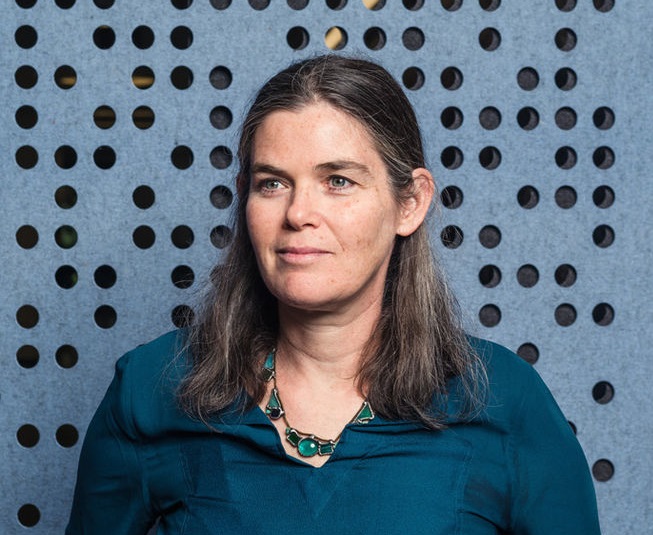
Dr. Daphne Koller stands as one of the most influential figures in modern artificial intelligence and machine learning, having revolutionized both global education through Coursera and drug discovery through Insitro.
As a MacArthur Fellow, member of multiple National Academies, and serial entrepreneur, she has consistently pushed the boundaries of what AI can achieve, from democratizing world-class education to accelerating life-saving drug development.
“It’s a problem when you have a set of technologies that are going to be so impactful on society and so much of the decision-making is in the hands of a very small, homogenous group of people. We’re going to miss out on so many opportunities and be vulnerable to so many potential pitfalls if we don’t have a diverse group of people shaping these technologies.”
Current Leadership and Impact
Dr. Daphne Koller is the CEO and Founder of Insitro, a machine learning-driven drug discovery and development company that is transforming how drugs are discovered and delivered to patients. Founded in 2018, Insitro has raised over $743 million, including a massive $400 million Series C round in 2021, making it one of the most well-funded AI biotech companies in the world.
She remains an Adjunct Professor of Computer Science at Stanford University, where she continues to influence the next generation of AI researchers after serving on the faculty for 18 years as the Rajeev Motwani Professor.
Educational Excellence and Early Achievement
Born in Jerusalem, Israel, on August 27, 1968, Dr. Koller demonstrated exceptional academic prowess from an early age. She completed her Bachelor’s degree in Mathematics and Computer Science at the Hebrew University of Jerusalem in 1985 at age 17, followed by a Master’s degree from the same institution in 1986 at age 18.
She completed her PhD at Stanford University in 1993 under the supervision of Joseph Halpern, focusing on probabilistic reasoning and artificial intelligence. After postdoctoral research at UC Berkeley under Stuart Russell from 1993 to 1995, she joined Stanford’s Computer Science faculty in 1995, where she would spend the next 18 years building a legendary career in AI research.
Groundbreaking Research in Artificial Intelligence
Dr. Koller’s research has fundamentally shaped modern machine learning and artificial intelligence. Her work focuses on probabilistic graphical models, Bayesian networks, and their applications to computational biology and computer vision.
Probabilistic Graphical Models
Her seminal contributions to probabilistic graphical models have provided frameworks for reasoning under uncertainty that are now standard in AI. In 2009, she co-authored the definitive textbook “Probabilistic Graphical Models: Principles and Techniques” with Nir Friedman, which became the foundation for countless AI applications.
Bayesian Machine Learning
Dr. Koller expanded Bayesian networks to handle complex, hierarchical data structures, enabling AI systems to make sophisticated inferences from incomplete information. Her work was featured in MIT Technology Review’s “10 Emerging Technologies That Will Change Your World” in 2004.
Computational Biology Applications
She pioneered the application of machine learning to biological systems, developing methods to analyze gene expression data, predict protein interactions, and understand disease mechanisms. This early work laid the foundation for her current efforts in AI-driven drug discovery.
Academic Recognition and Awards
Dr. Koller has received virtually every major recognition in computer science and AI:
Major Fellowships and Awards:
- MacArthur Foundation Fellowship (2004) – Recognized for creative and original contributions to AI
- ACM Prize in Computing (2008) – First recipient of the $150,000 ACM-Infosys Foundation Award
- ACM AAAI Allen Newell Award (2019) – For contributions bridging computer science and other disciplines
- IEEE CS Women of ENIAC Computer Pioneer Award (2022) – For contributions to computational biology and human health
- Presidential Early Career Award for Scientists and Engineers (PECASE) (1999)
- IJCAI Computers and Thought Award (2001)
Academy Memberships:
- National Academy of Sciences (2023) – Elected for distinguished achievements
- National Academy of Engineering (2011) – For contributions to probabilistic models
- American Academy of Arts and Sciences (2014) – Fellow recognition
- International Society of Computational Biology (2017) – Fellow status
Academic Honors:
- Over 300 refereed publications in venues ranging from Science and Nature to NeurIPS and ICML
- h-index over 150, indicating exceptional research impact
- Cox Medal from Stanford for excellence in fostering undergraduate research
- Creator and leader of CURIS (Computer Science Undergraduate Research Experience), which has trained over 500 students
Revolutionizing Global Education: Coursera
In 2012, Dr. Koller co-founded Coursera with Andrew Ng, creating the world’s largest platform for massive open online courses (MOOCs). This venture fundamentally transformed global access to high-quality education.
The Genesis of Online Learning
The idea emerged from their experience offering Stanford computer science courses online for free, which unexpectedly attracted over 100,000 learners each without marketing. Recognizing the massive global demand for quality education, they quickly scaled beyond Stanford.
Building a Global Platform
Within months, they persuaded Princeton, University of Pennsylvania, and University of Michigan to join. Despite having no initial monetization plan, investors immediately recognized the potential, with early backing from prominent investors including John Doerr.
Massive Scale and Impact
- Over 100 million learners worldwide have accessed Coursera courses
- Named to TIME Magazine’s 100 Most Influential People in 2012
- Transformed higher education accessibility by making world-class courses available globally
- Enterprise partnerships with major corporations for workforce development
Leadership Evolution
Dr. Koller served as co-CEO with Ng, then as President before transitioning to focus on new ventures. Under her leadership, the platform established sustainable revenue models and expanded into certificate programs and degree offerings.
Pioneering AI-Driven Drug Discovery: Insitro
In 2018, after serving as Chief Computing Officer at Calico (an Alphabet subsidiary), Dr. Koller founded Insitro to apply machine learning to the fundamental challenges of drug discovery and development.
Revolutionary Approach
Insitro represents a new paradigm in pharmaceutical development, using machine learning at every stage:
- Target Identification: Using AI to discover novel drug targets
- Lead Discovery: Machine learning-guided compound identification
- Clinical Development: Predictive models for patient stratification and trial design
Record-Breaking Funding
- $743 million total funding across multiple rounds
- $400 million Series C (2021) led by Canada Pension Plan Investment Board
- Major investors include Andreessen Horenz, Third Rock Ventures, GV, and T. Rowe Price
Strategic Partnerships
- Bristol Myers Squibb: $2 billion potential collaboration for ALS and dementia research
- Gilead Sciences: Multi-year partnership worth up to $1.05 billion
- Acquisition strategy: Acquired Haystack Sciences to enhance small molecule discovery capabilities
Therapeutic Focus
Insitro is building a pipeline across multiple therapeutic areas:
- Neuroscience: ALS, dementia, and other neurological conditions
- Oncology: Cancer research and targeted therapies
- Metabolism: Liver diseases and metabolic disorders
Additional Ventures: Engageli
In 2020, Dr. Koller co-founded Engageli, an interactive digital learning platform designed to address limitations of existing online education tools. The platform focuses on improving student engagement and learning outcomes through real-time evaluations and superior interactive experiences.
What Women in the Field Can Learn from Dr. Daphne Koller
1. Combine Deep Technical Expertise with Entrepreneurial Vision
Dr. Koller’s success stems from mastering both cutting-edge research and practical application. Her deep understanding of probabilistic models enabled her to recognize opportunities in both education and drug discovery. Women can build similar advantages by developing both theoretical depth and market awareness.
2. Identify and Address Fundamental Problems
Her ventures target massive, fundamental challenges: global education inequality and the inefficiency of drug discovery. Rather than incremental improvements, she tackles systemic problems that affect millions of people. Women can differentiate themselves by focusing on transformational rather than marginal opportunities.
3. Build on Academic Excellence to Create Real-World Impact
Her transition from academia to entrepreneurship leveraged her research credentials to attract investors, partners, and talent. Academic achievements provided credibility that enabled large-scale impact. Women can use research excellence as a foundation for broader influence.
4. Scale Solutions Through Technology Platforms
Both Coursera and Insitro are platform-based businesses that leverage technology to scale impact far beyond what individual services could achieve. Women can maximize their influence by building scalable systems rather than linear service businesses.
5. Maintain Multiple Professional Identities
She successfully balances roles as researcher, entrepreneur, educator, and thought leader. Rather than limiting herself to one identity, she draws strength from multiple domains. Women can avoid narrow categorization by developing expertise across different areas.
6. Apply AI to Transform Traditional Industries
Her success comes from bringing AI to sectors (education, pharmaceuticals) that hadn’t fully embraced these technologies. Women can create significant impact by identifying industries ready for AI transformation and leading that change.
7. Build Diverse, World-Class Teams
Both her ventures emphasize assembling teams that combine technical excellence with domain expertise. At Insitro, 30% of leadership are women, significantly above industry averages. Women can create competitive advantages through diverse, high-quality team building.
8. Leverage Network Effects and Partnerships
Coursera’s university partnerships and Insitro’s pharmaceutical collaborations demonstrate how strategic partnerships can accelerate growth and impact. Women can amplify their influence through carefully chosen strategic relationships.
9. Maintain Long-Term Vision While Executing Short-Term Goals
Her projects require years or decades to fully realize their potential, yet she maintains momentum through clear milestones and achievements. Women in long-term ventures need to balance visionary thinking with concrete progress.
10. Use Success to Create Opportunities for Others
Through CURIS at Stanford, mentoring, and inclusive hiring practices, she actively creates opportunities for the next generation. Women can multiply their impact by using their success to advance others.
Key Resources and Links
Professional Profiles:
- Insitro Leadership Page: https://www.insitro.com/leadership/daphne-koller/
- LinkedIn: https://www.linkedin.com/in/daphne-koller-4053a820/
- Twitter/X: https://x.com/daphnekoller
- Stanford AI Lab: https://ai.stanford.edu/~koller/
Academic and Research:
- Stanford Faculty Profile: Historical information through Stanford CS department
- Google Scholar: Citations and publication records
- MacArthur Foundation Profile: https://www.macfound.org/fellows/class-of-2004/daphne-koller
Companies and Ventures:
- Insitro: https://www.insitro.com/
- Coursera Instructor Profile: https://www.coursera.org/instructor/koller
- American Academy of Arts and Sciences: https://www.amacad.org/person/daphne-koller
Media and Recognition:
- IEEE Computer Society Profile: https://www.computer.org/profiles/daphne-koller/
- TIME Magazine recognition for Coursera impact
- Various interviews and profiles in major publications
Technical Contributions and Publications
Dr. Koller has authored over 300 peer-reviewed publications appearing in top-tier venues including:
- Science, Nature, Cell – High-impact biological applications
- NeurIPS, ICML – Core machine learning conferences
- IJCAI, AAAI – Artificial intelligence venues
- Nature Genetics – Computational biology applications
Her textbook “Probabilistic Graphical Models: Principles and Techniques” remains the definitive reference in the field and has influenced thousands of researchers and practitioners.
Vision for AI’s Future
Dr. Koller advocates for AI applications that address humanity’s greatest challenges. Her work demonstrates how AI can democratize access to world-class education and accelerate the discovery of life-saving medicines.
Responsible AI Development
She emphasizes the importance of developing AI systems that are:
- Transparent and interpretable, particularly in high-stakes applications like healthcare
- Inclusive and accessible, ensuring benefits reach diverse populations
- Scientifically rigorous, with proper validation and testing
Interdisciplinary Collaboration
Her success comes from combining AI with domain expertise in education and biology. She advocates for “bilingual” professionals who can bridge technical AI capabilities with deep understanding of application domains.
Current Impact and Future Directions
Dr. Koller continues to push boundaries across multiple domains:
Insitro’s Growing Pipeline
The company is advancing multiple therapeutic programs while building platform capabilities that could transform pharmaceutical R&D across the industry.
Educational Innovation
Through Engageli and continued involvement with Coursera, she continues to innovate in digital learning and educational accessibility.
Policy and Industry Leadership
Her voice is increasingly influential in discussions about AI governance, responsible development, and the future of both education and healthcare.
Legacy and Continuing Influence
Dr. Daphne Koller represents a model of how technical excellence can drive transformational social impact. Her career demonstrates that the most significant contributions to AI come not just from algorithmic innovations, but from applying these innovations to solve fundamental human challenges.
Her influence extends far beyond her direct contributions:
- Thousands of researchers have built on her probabilistic modeling frameworks
- Millions of learners have accessed education through platforms she created
- Future patients will benefit from medicines discovered using her AI approaches
- Next-generation entrepreneurs are inspired by her model of combining technical depth with social impact
For women in machine learning, Dr. Koller’s career offers a blueprint for building influence through excellence, vision, and commitment to positive change. Her success shows that women can lead not just individual research projects, but transformation of entire industries toward more effective, accessible, and beneficial outcomes.
Dr. Daphne Koller’s journey from probabilistic reasoning researcher to global education pioneer and biotech entrepreneur illustrates how deep technical expertise, combined with visionary thinking and commitment to social impact, can create lasting change across multiple domains.