
Pioneering AI Ethics and Fighting for Justice
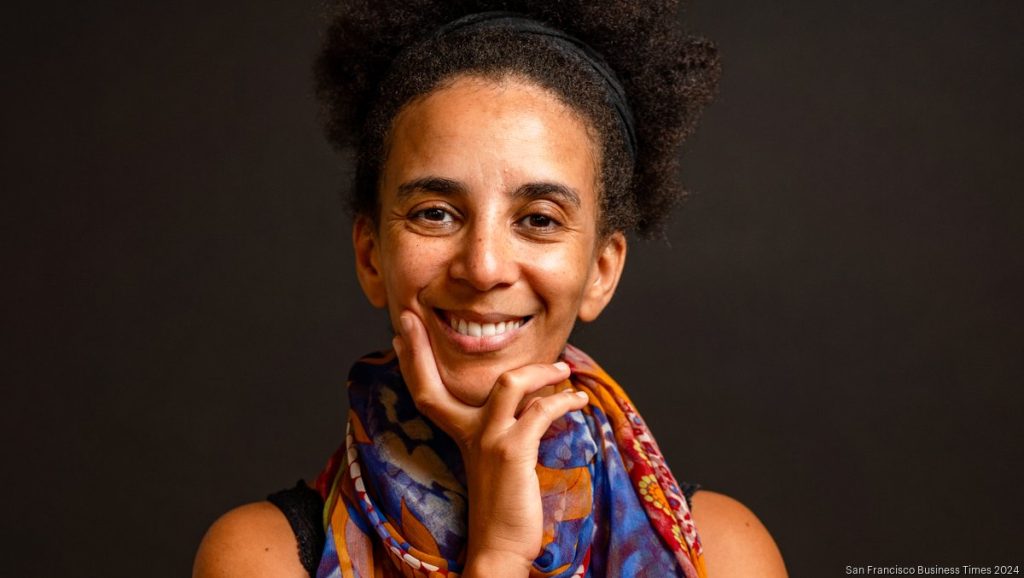
Dr. Timnit Gebru stands as one of the most influential and courageous voices in artificial intelligence ethics, having fundamentally reshaped how the world understands algorithmic bias, fairness, and the social implications of AI systems.
As the founder of the Distributed Artificial Intelligence Research Institute (DAIR), co-founder of Black in AI, and co-author of the groundbreaking “Gender Shades” research, she has consistently challenged power structures in tech to create more equitable and accountable AI for everyone.
It’s not just about getting more women in the field. It’s about what happens when you’re there. And it’s about what happens when you speak up. And what happens when you get pushed out.
Current Leadership and Vision
Dr. Timnit Gebru is the Founder and Executive Director of the Distributed Artificial Intelligence Research Institute (DAIR), which she launched in December 2021. DAIR represents a revolutionary approach to AI research – an independent, community-rooted institute free from Big Tech’s influence that focuses on documenting and addressing AI’s impact on marginalized communities, particularly in Africa and the African diaspora.
DAIR’s Revolutionary Principles:
- Fair compensation for all workers, including often-exploited data annotators
- Sustainable work practices rejecting the “publish or perish” mentality
- Community-centered research led by people from affected communities
- Independent funding free from Big Tech influence
Personal Journey and Resilience
Born in Addis Ababa, Ethiopia, in 1982/1983 to Eritrean parents, Dr. Gebru’s early life was shaped by political upheaval and displacement. Her father, an electrical engineer with a PhD, passed away when she was five, and she was raised by her mother, an economist.
At age 15, she fled Ethiopia as a political refugee due to the Eritrean-Ethiopian War, initially living in Ireland before being granted political asylum in the United States. Settling in Somerville, Massachusetts, she faced racial discrimination in high school, where teachers discouraged her from taking Advanced Placement courses despite her academic abilities.
Educational Excellence Against the Odds
Stanford University Achievement (2001-2017):
- Bachelor of Science in Electrical Engineering (earned while working at Apple)
- Master of Science in Electrical Engineering
- PhD in Computer Vision (2017) under renowned AI researcher Fei-Fei Li
While pursuing her degrees, she worked at Apple for six years, designing circuits and signal processing algorithms for various products including the first iPad, demonstrating her ability to excel in both academic and industry settings simultaneously.
Revolutionary Research: Gender Shades
Dr. Gebru’s most famous contribution to AI ethics came through the “Gender Shades” project, co-authored with Joy Buolamwini in 2018. This groundbreaking research exposed devastating bias in commercial facial recognition systems:
The Shocking Findings
- Error rates for darker-skinned women: up to 34.7%
- Error rates for lighter-skinned men: as low as 0.8%
- Systems tested: IBM, Microsoft, and Face++
Immediate Industry Impact
- IBM immediately improved algorithms and later discontinued general-purpose facial recognition
- Microsoft announced retirement of face-based gender classification in Azure Face API (2023)
- Amazon faced sustained pressure to address bias in their systems
Co-Founding Black in AI
In 2016, after attending the Neural Information Processing Systems (NeurIPS) conference and discovering she was the only Black woman among 8,500 attendees, Dr. Gebru co-founded Black in AI with Rediet Abebe.
Mission and Impact:
- Increase Black representation in AI research and development
- Create mentorship opportunities and professional networks
- Advocate for diverse perspectives in AI system development
- Annual workshops at major conferences since 2017
Stanford PhD Research: Computational Sociology
Her doctoral research pioneered “visual computational sociology,” analyzing over 15 million Google Street View images from 200 U.S. cities, demonstrating that:
- Car types predict voting patterns (pickup trucks correlate with Republican voting)
- AI can infer socioeconomic attributes including income, race, and education
- Won the 2017 LDV Capital Vision Summit competition
Microsoft Research: FATE Group
From 2017-2018, Dr. Gebru worked as a postdoctoral researcher at Microsoft Research in the Fairness, Accountability, Transparency, and Ethics in AI (FATE) group, focusing on:
- Algorithmic bias detection and mitigation
- Ethical implications of data mining projects
- Public education about AI’s societal impacts
Google and the “Stochastic Parrots” Controversy
In 2018, Dr. Gebru joined Google to co-lead the Ethical Artificial Intelligence Team. In December 2020, she co-authored “On the Dangers of Stochastic Parrots: Can Language Models Be Too Big?” examining risks of large language models including environmental costs and bias perpetuation.
The Industry Reckoning
When Google management demanded she withdraw the paper, Dr. Gebru refused and was subsequently fired, sparking unprecedented controversy:
- Nearly 2,700 Google employees signed a letter condemning her firing
- Over 4,300 academics and civil society supporters demanded accountability
- Nine members of Congress sent a letter to Google asking for clarification
- Formation of Google’s first union partially attributed to the labor movement following her dismissal
Recognition and Global Influence
Major Awards and Honors:
- Fortune’s World’s 50 Greatest Leaders (2021)
- Nature’s 10 People Who Shaped Science (2021)
- TIME’s 100 Most Influential People (2022)
- Carnegie Corporation’s Great Immigrants Award (2023)
- BBC’s 100 Women (2023)
- VentureBeat AI Innovations Award (2019) for Gender Shades research
What Women in the Field Can Learn from Dr. Timnit Gebru
1. Turn Personal Experience into Systemic Change
Channel encounters with discrimination and bias into research and advocacy that benefits everyone.
2. Prioritize Community Over Individual Recognition
Build collective power through community building and mutual support for lasting change.
3. Use Rigorous Research to Expose Uncomfortable Truths
Leverage technical excellence to make compelling cases for justice that transcend ideological debates.
4. Maintain Independence and Integrity
Professional independence, though costly, enables more impactful work and authentic voice.
5. Build Interdisciplinary Bridges
Combine computer science, sociology, ethics, and activism to address complex social problems.
6. Center Those Most Affected by Technology
Ensure that those most impacted by AI have agency in research about them.
7. Challenge Dominant Narratives About Technology
Develop alternative visions for technology’s role in society beyond corporate profit.
8. Embrace the Role of “Troublemaker”
Recognize that creating change sometimes requires being seen as disruptive or difficult.
9. Document and Communicate Your Work
Make technical work accessible to broader communities and policymakers.
10. Create New Institutions When Existing Ones Fail
Build new institutions that better serve your values and communities when reform isn’t enough.
Current Impact and DAIR’s Mission
DAIR operates on revolutionary principles that challenge traditional AI research:
Current Research Projects:
- South African township analysis using satellite imagery to study apartheid’s lasting effects
- Content moderation exploitation documenting poor working conditions in Kenya
- Refugee surveillance examining how social media enables harassment
- AI colonialism investigating how AI development replicates historical exploitation
Innovative Research Model:
DAIR employs researchers from the communities being studied, ensuring knowledge and recognition flow to those with lived experience rather than extractive researchers.
Key Resources and Links
Professional Profiles:
- DAIR Institute
- LinkedIn Profile
- Google Scholar (Available through academic search)
Organizations:
- Black in AI
- Gender Shades Project
- DAIR Research Institute
Legacy and Continuing Influence
Dr. Timnit Gebru has fundamentally altered the trajectory of AI research and development. Her work has:
- Made algorithmic bias a mainstream concern forcing companies to address fairness
- Created space for ethical questions in technical conferences and research
- Established community-centered research as a viable alternative to corporate-dominated AI development
- Inspired a generation of researchers to consider the social implications of their work
- Demonstrated how individual courage can create systemic change
For women in machine learning, Dr. Gebru’s career offers a blueprint for creating change through technical excellence combined with moral courage. Her success demonstrates that women don’t have to choose between rigorous research and social justice – they can use technical skills to expose injustice and build more equitable systems.
Her story shows that the most important contributions to AI may come not from developing new algorithms, but from ensuring that existing systems serve justice rather than perpetuating harm. In an era of rapid AI development, her voice remains essential for ensuring that these powerful technologies benefit everyone, not just those with the power to build them.
Dr. Timnit Gebru’s journey from refugee to global AI ethics leader illustrates how personal experiences with injustice, combined with technical excellence and moral courage, can reshape entire industries toward greater fairness and accountability.